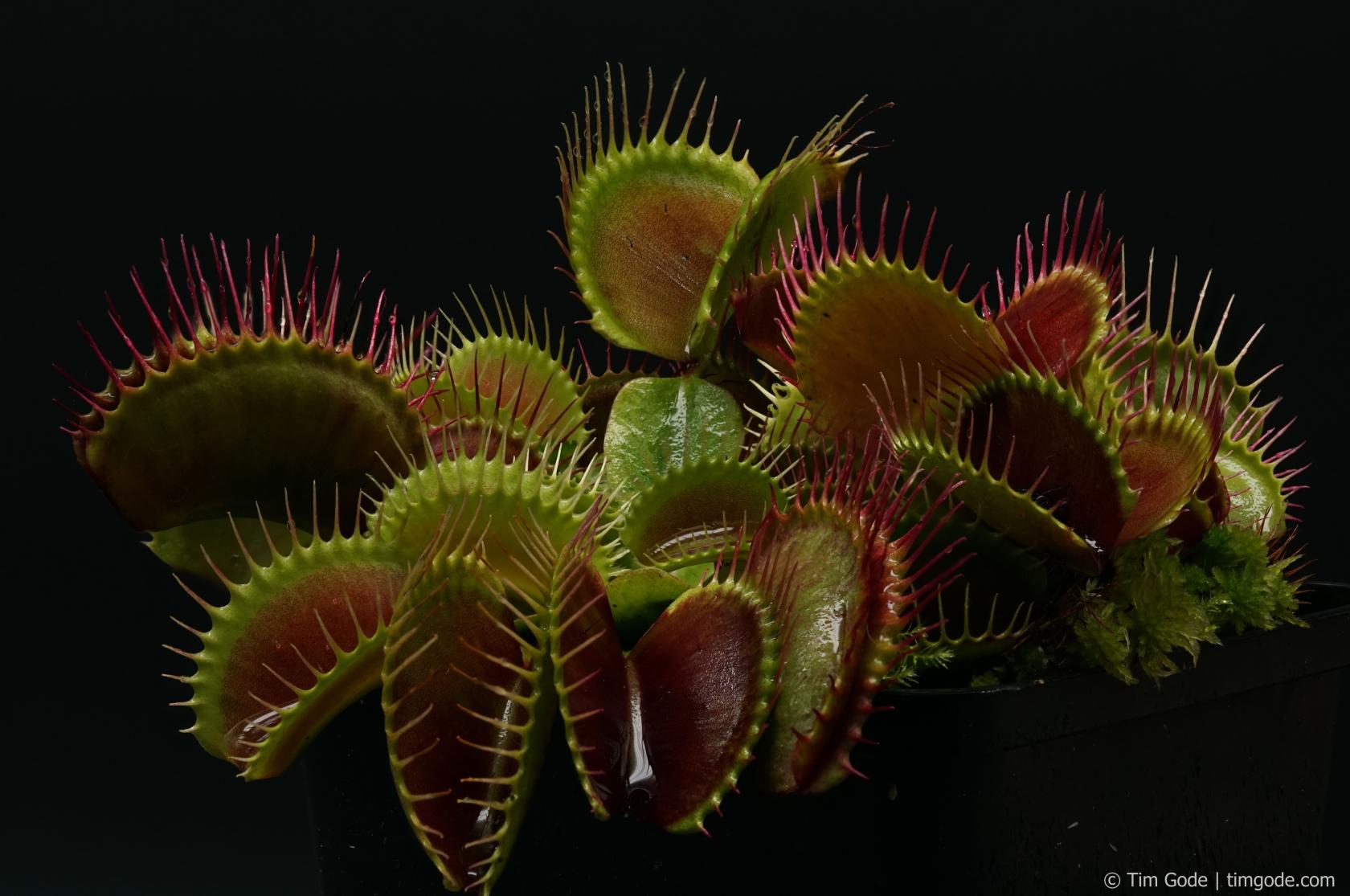
# Dionaea muscipula

<div class="cp-lead" id="bkmrk-nepenthes-ampullaria"><aside class="cp-infobox"><div class="cp-infobox-image">[![Dionaea_muscipula_megatraps.jpg](https://carnipedia.org/uploads/images/gallery/2026-03/scaled-1680-/dionaea-muscipula-megatraps.jpg)](https://carnipedia.org/uploads/images/gallery/2026-03/dionaea-muscipula-megatraps.jpg)<div>*Dionaea muscipula*</div></div><table><tbody><tr><td>**Family**</td><td>Sundew family (Droseraceae)</td></tr><tr><td>**Genus**</td><td>Dionaea</td></tr><tr><td>**Clade**</td><td>Eudicots</td></tr><tr><td>**Species**</td><td>Dionaea muscipula</td></tr><tr><td>**Author**</td><td><span class="cp-smallcaps">J. Ellis</span></td></tr><tr><td>**Distribution**</td><td>USA</td></tr><tr><td>**Climate**</td><td>Temperate</td></tr><tr><td>**Space requierement**</td><td>low</td></tr><tr><td>**Growth habit**</td><td>Rosette</td></tr><tr><td>**Tolerance**</td><td>Broad</td></tr></tbody></table>

</aside><div class="cp-text">*The Venus flytrap (*Dionaea muscipula*) is probably the best-known carnivorous plant of all. It occurs exclusively within a radius of about 100 km around the city of Wilmington in the United States. Its distribution range lies in pocosin bogs located in the states of North and South Carolina.  
  
These bogs have very nutrient-poor and acidic soils that are peaty and sandy. The habitats are permanently moist and always located in very sunny, open areas. In the wild, *Dionaea muscipula* is already threatened, yet it is available in almost every well-stocked garden center or hardware store, and sometimes even in furniture stores.  
  
In its natural habitat, temperatures range from -10 °C to 40 °C. Venus flytraps require a winter dormancy for healthy long-term cultivation. During winter, temperatures should not exceed 12 °C.*</div></div><div class="cp-after-lead" id="bkmrk-">  
</div>## Cultivation

### Ideal Conditions

<table id="bkmrk-parameter-empfehlung" style="width: 100%; height: 199.375px;"><tbody><tr style="height: 29.7969px;"><th style="width: 18.4744%; height: 29.7969px;">Parameter</th><th style="width: 13.7068%; height: 29.7969px;">Suggestion</th><th style="width: 67.8188%; height: 29.7969px;">Notes</th></tr><tr style="height: 46.5938px;"><td style="width: 18.4744%; height: 46.5938px;">**Temperature (Summer)**</td><td style="width: 13.7068%; height: 46.5938px;">10 - 30 °C</td><td style="width: 67.8188%; height: 46.5938px;">Also withstands 40 °C but isnt recommended. Substrate should stay cooler</td></tr><tr style="height: 46.5938px;"><td style="width: 18.4744%; height: 46.5938px;">**Temperature (Winter)**</td><td style="width: 13.7068%; height: 46.5938px;">-10 - 12 °C</td><td style="width: 67.8188%; height: 46.5938px;">should below 12 °C in Winters to stay in dormancy</td></tr><tr style="height: 46.5938px;"><td style="width: 18.4744%; height: 46.5938px;">**Light**</td><td style="width: 13.7068%; height: 46.5938px;">1500–2000 PPFD</td><td style="width: 67.8188%; height: 46.5938px;">Full sun in the outside is preferred, 8hrs or more. Wont live behind windows for too long</td></tr><tr style="height: 29.7969px;"><td style="width: 18.4744%; height: 29.7969px;">**Humidity**</td><td style="width: 13.7068%; height: 29.7969px;">30–60 %</td><td style="width: 67.8188%; height: 29.7969px;">Needs no special humidity, below 70% often prevents mold issues</td></tr></tbody></table>

### Substrate &amp; Fertilizing

<table id="bkmrk-parameter-empfehlung-1" style="width: 100%; height: 212.375px;"><tbody><tr style="height: 29.7969px;"><th style="width: 18.7128%; height: 29.7969px;">Parameter</th><th style="width: 23.2385%; height: 29.7969px;">Suggestion</th><th style="width: 58.0487%; height: 29.7969px;">Hinweise</th></tr><tr style="height: 29.7969px;"><td style="width: 18.7128%; height: 29.7969px;">**Substrate**</td><td style="width: 23.2385%; height: 29.7969px;">Peat, Perlite, Sand mixes or Sphagnum</td><td style="width: 58.0487%; height: 29.7969px;">One of the very few species which isnt recommended to have potted in anything else </td></tr><tr style="height: 46.5938px;"><td style="width: 18.7128%; height: 46.5938px;">**Potsize**</td><td style="width: 23.2385%; height: 46.5938px;">small pot</td><td style="width: 58.0487%; height: 46.5938px;">it crawls slowly forward and deeper into the pot. 9cm pot enough for many plants</td></tr><tr style="height: 29.7969px;"><td style="width: 18.7128%; height: 29.7969px;">**Watering**</td><td style="width: 23.2385%; height: 29.7969px;">Always keep very moist</td><td style="width: 58.0487%; height: 29.7969px;">Having a tray always filled with water</td></tr><tr style="height: 46.5938px;"><td style="width: 18.7128%; height: 46.5938px;">**Fertilizing**</td><td style="width: 23.2385%; height: 46.5938px;">2-3 Osmocote per Pot </td><td style="width: 58.0487%; height: 46.5938px;">Osmocote is something which works well with Flytraps</td></tr><tr style="height: 29.7969px;"><td style="width: 18.7128%; height: 29.7969px;">**Fertilizer Tolerance**</td><td style="width: 23.2385%; height: 29.7969px;">medium</td><td style="width: 58.0487%; height: 29.7969px;">Doesnt need fertilizer if kept outside, it will catch insects for sure</td></tr></tbody></table>

### <span class="Yjhzub">Unique characteristics</span> 

- Is available with many unique traits and mutations
- Often wont get red when roots are disturbed in the same season
- Flower stalks can be used for propagation
- Dormancy can be done in the fridge if no other good space is available
- Doesnt need any light below 5 °C
- Flowers occur between April - May, they can be cut to save the plant a lot of energy
- Monotypical Genus
- Rhizomes can be divided for propagation
- Dormancy in a bog often without any issues when temperatures arent below -10 °C
- Seeds remain viable only for a very short time and should always be sown immediately, does not require stratification

## Galery

### General Pictures

<div class="cp-gallery" id="bkmrk--1">-- no pictures yet --  
  
  
</div>### User Cultivatad Plants 

<table id="bkmrk-bild-bedingungen-tem" style="width: 100.238%;"><tbody><tr><th style="width: 29.3284%;">Bild</th><th style="width: 70.6716%;">Conditions</th></tr><tr><td style="width: 29.3284%;"><div class="cp-gallery-vertical">[ ](https://carnipedia.org/uploads/images/gallery/2026-03/zzximage.png)</div>[![Dionaea_muscipula_megatraps.jpg](https://carnipedia.org/uploads/images/gallery/2026-03/scaled-1680-/ixWdionaea-muscipula-megatraps.jpg)](https://carnipedia.org/uploads/images/gallery/2026-03/ixWdionaea-muscipula-megatraps.jpg)  
Dionaea muscipula - Megatraps

[![Dionaea_muscipula_megatraps_Frost.jpg](https://carnipedia.org/uploads/images/gallery/2026-03/scaled-1680-/dionaea-muscipula-megatraps-frost.jpg)](https://carnipedia.org/uploads/images/gallery/2026-03/dionaea-muscipula-megatraps-frost.jpg)  
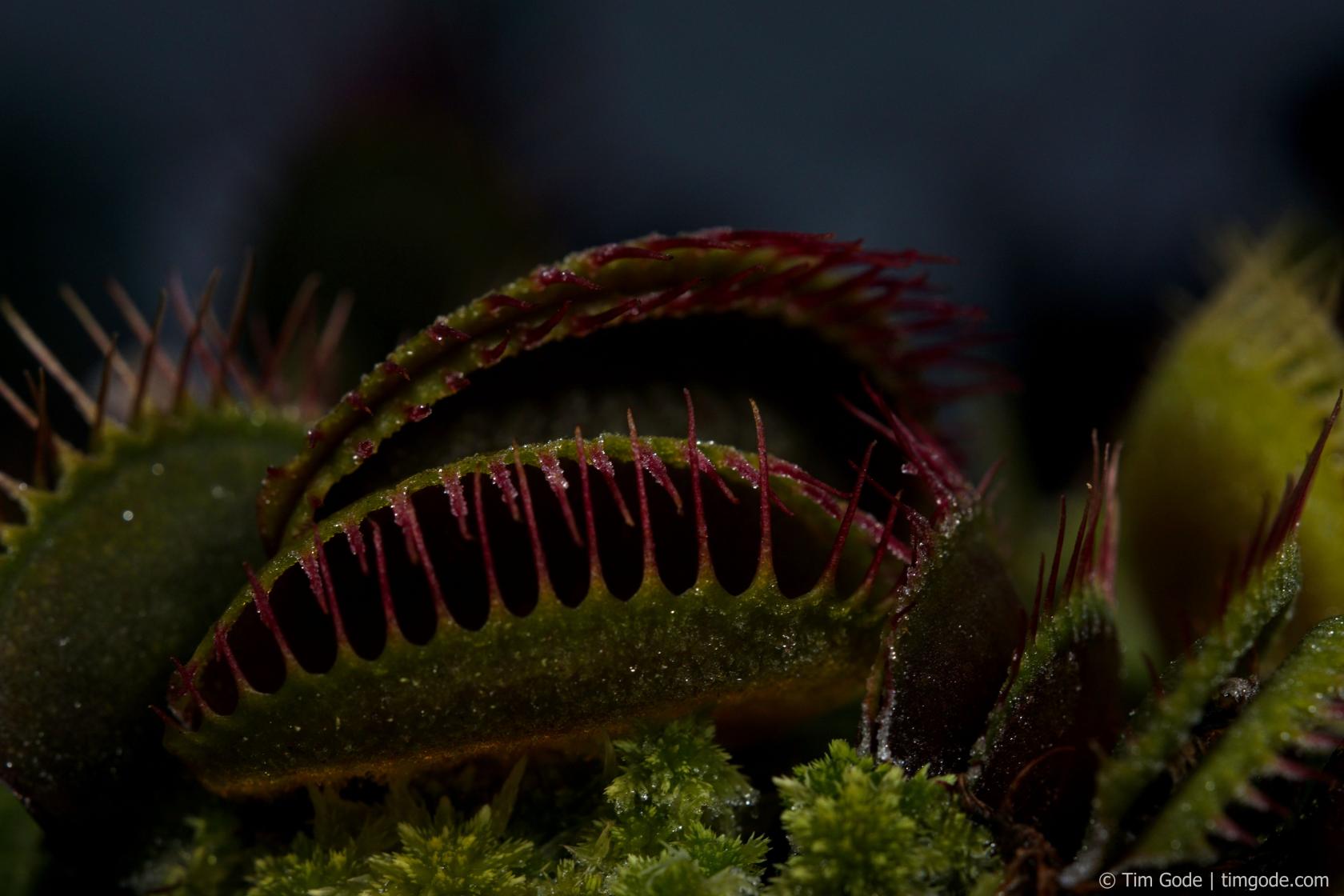
Dionaea muscipula - Megatraps at frost

[![Dionaea_muscipula_GJ_Shir_Khan.jpg](https://carnipedia.org/uploads/images/gallery/2026-03/scaled-1680-/dionaea-muscipula-gj-shir-khan.jpg)](https://carnipedia.org/uploads/images/gallery/2026-03/dionaea-muscipula-gj-shir-khan.jpg)
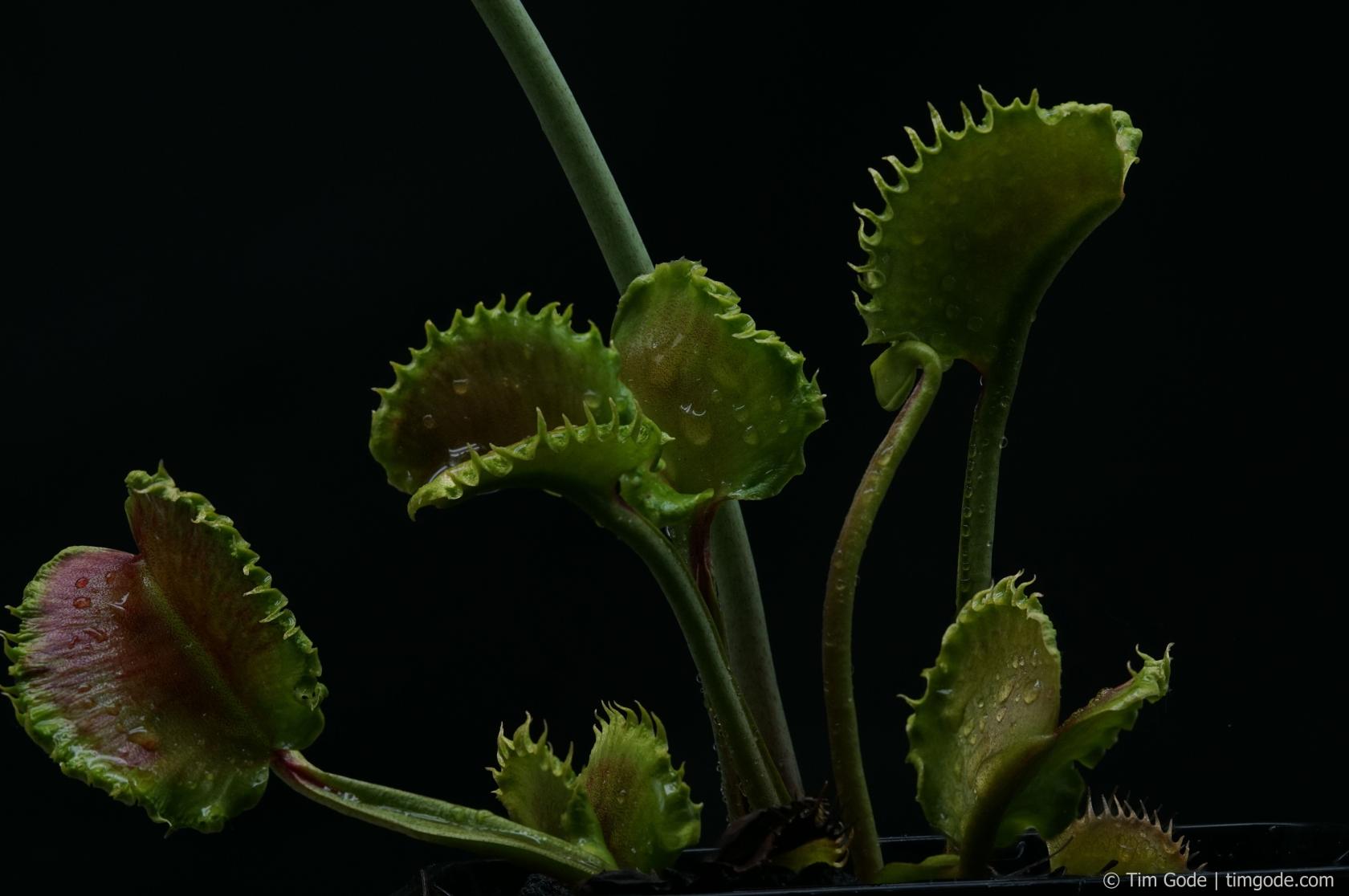
<div class="cp-gallery-vertical">Dionaea muscipula - GJ Shir Khan</div></td><td style="width: 70.6716%;">**Temperature**- Outdoor middle-Germany

**Humidity**- Weather-dependant

**Light Intensity**- Southwest-facing balcony → full sun from around 12:00 noon

**Notes**- Cultivated in pots placed in Euro trays and 9 × 9 cm pots, standing permanently in about 3–4 cm of water.
- Covered in winter for frost protection

</td></tr><tr><td colspan="2" style="width: 100%;">**Cultivated By:** [Tim](https://carnipedia.org/books/community/page/tim)</td></tr></tbody></table>

### Common Issues

- Way too less light
- No Dormancy period
- Watering with tap water (lime !)

## Weblinks

- [Wikipedia – Dionaea muscipula](https://en.wikipedia.org/wiki/Venus_flytrap)