Dionaea muscipula
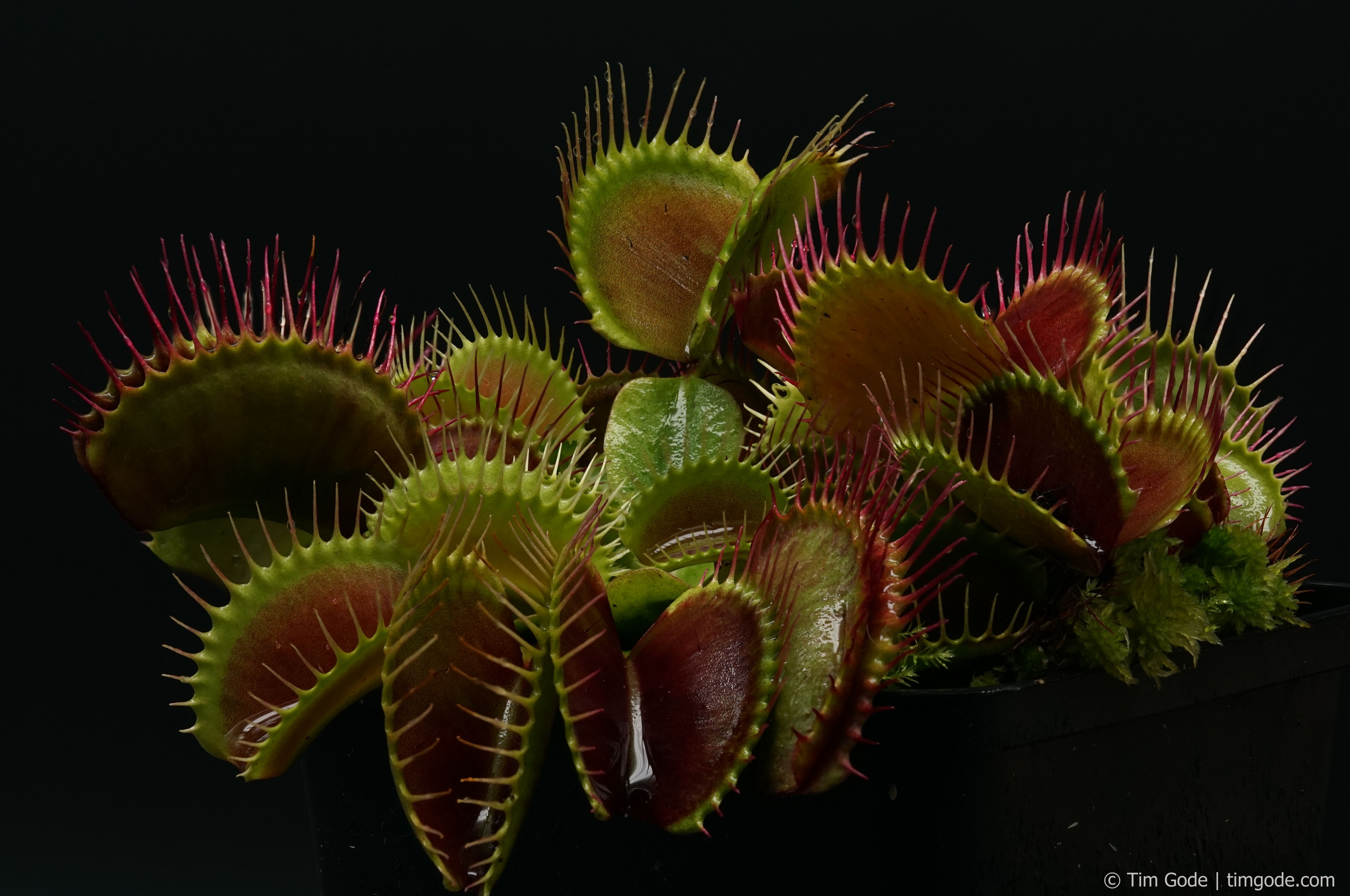
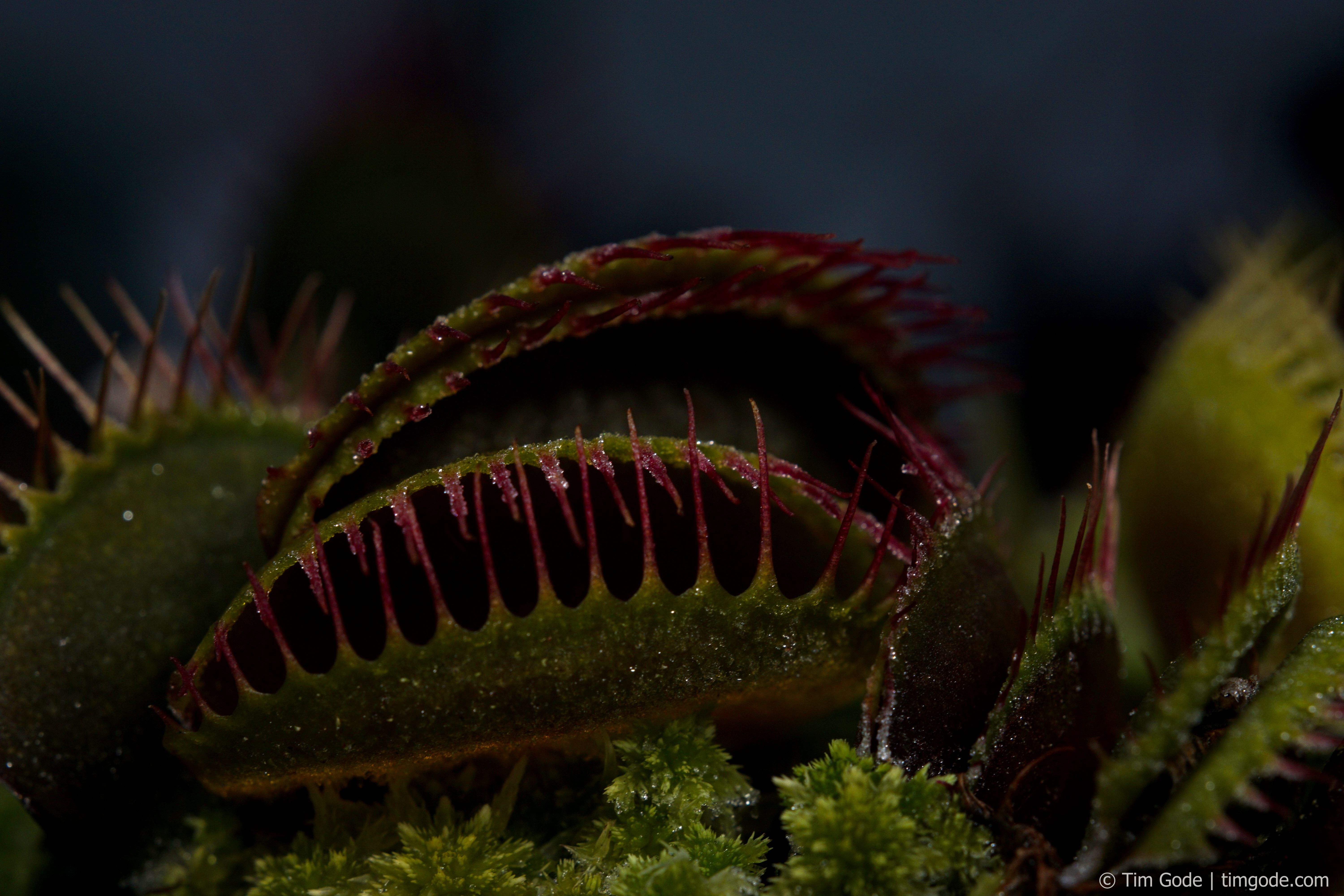
The Venus flytrap (Dionaea muscipula) is probably the best-known carnivorous plant of all. It occurs exclusively within a radius of about 100 km around the city of Wilmington in the United States. Its distribution range lies in pocosin bogs located in the states of North and South Carolina.
These bogs have very nutrient-poor and acidic soils that are peaty and sandy. The habitats are permanently moist and always located in very sunny, open areas. In the wild, Dionaea muscipula is already threatened, yet it is available in almost every well-stocked garden center or hardware store, and sometimes even in furniture stores.
In its natural habitat, temperatures range from -10 °C to 40 °C. Venus flytraps require a winter dormancy for healthy long-term cultivation. During winter, temperatures should not exceed 12 °C.
These bogs have very nutrient-poor and acidic soils that are peaty and sandy. The habitats are permanently moist and always located in very sunny, open areas. In the wild, Dionaea muscipula is already threatened, yet it is available in almost every well-stocked garden center or hardware store, and sometimes even in furniture stores.
In its natural habitat, temperatures range from -10 °C to 40 °C. Venus flytraps require a winter dormancy for healthy long-term cultivation. During winter, temperatures should not exceed 12 °C.
Cultivation
Ideal Conditions
| Parameter | Suggestion | Notes |
|---|---|---|
| Temperature ( |
||
| Temperature ( |
||
| Light | ||
| Humidity |
Substrate & Fertilizing
| Parameter | Suggestion | Hinweise |
|---|---|---|
| Substrate | ||
| Potsize | ||
| Watering | Always keep very moist | |
| Fertilizing | ||
| Fertilizer Tolerance | medium |
Unique characteristics
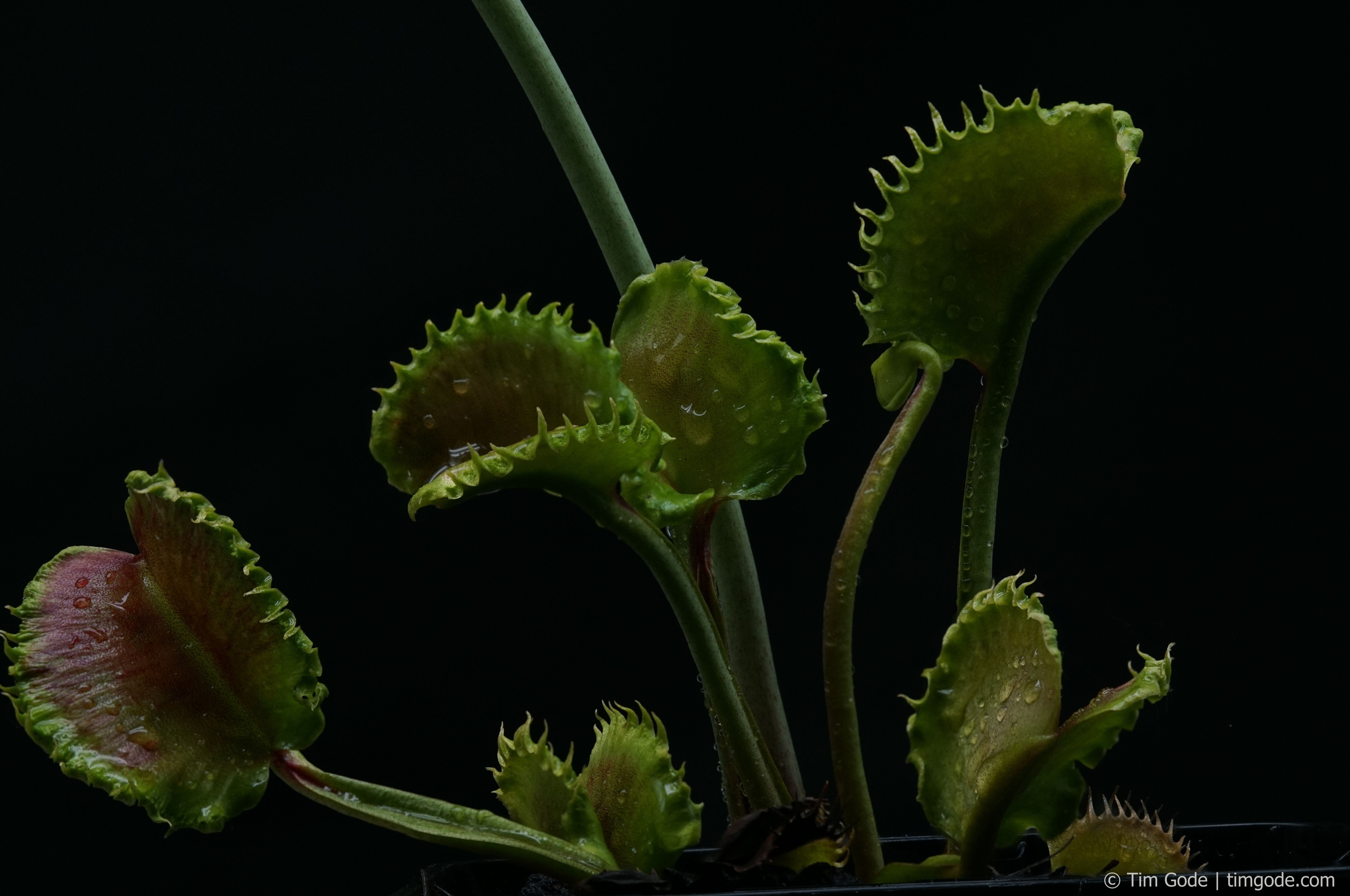
BildetIsTeppicheavailableauswithzahlreichenmanyBasaltriebenunique traits and mutationsSehrOftenschnelleswontWachstumgetbeiredhohenwhenTemperaturenroots are disturbed in the same seasonHochkannenFlowerwerdenstalksnurcanseltenbegebildetused for propagationInDormancyvielencanFarbvariantenbeerhältlichdone in the fridge if no other good space is available
Galery
General Pictures

User Cultivatad Plants
| Bild | Conditions |
|---|---|
Dionaea muscipula - GJ Shir Khan
|
Temperature
|
| Cultivated By: |
|