
Nepenthes ampullaria
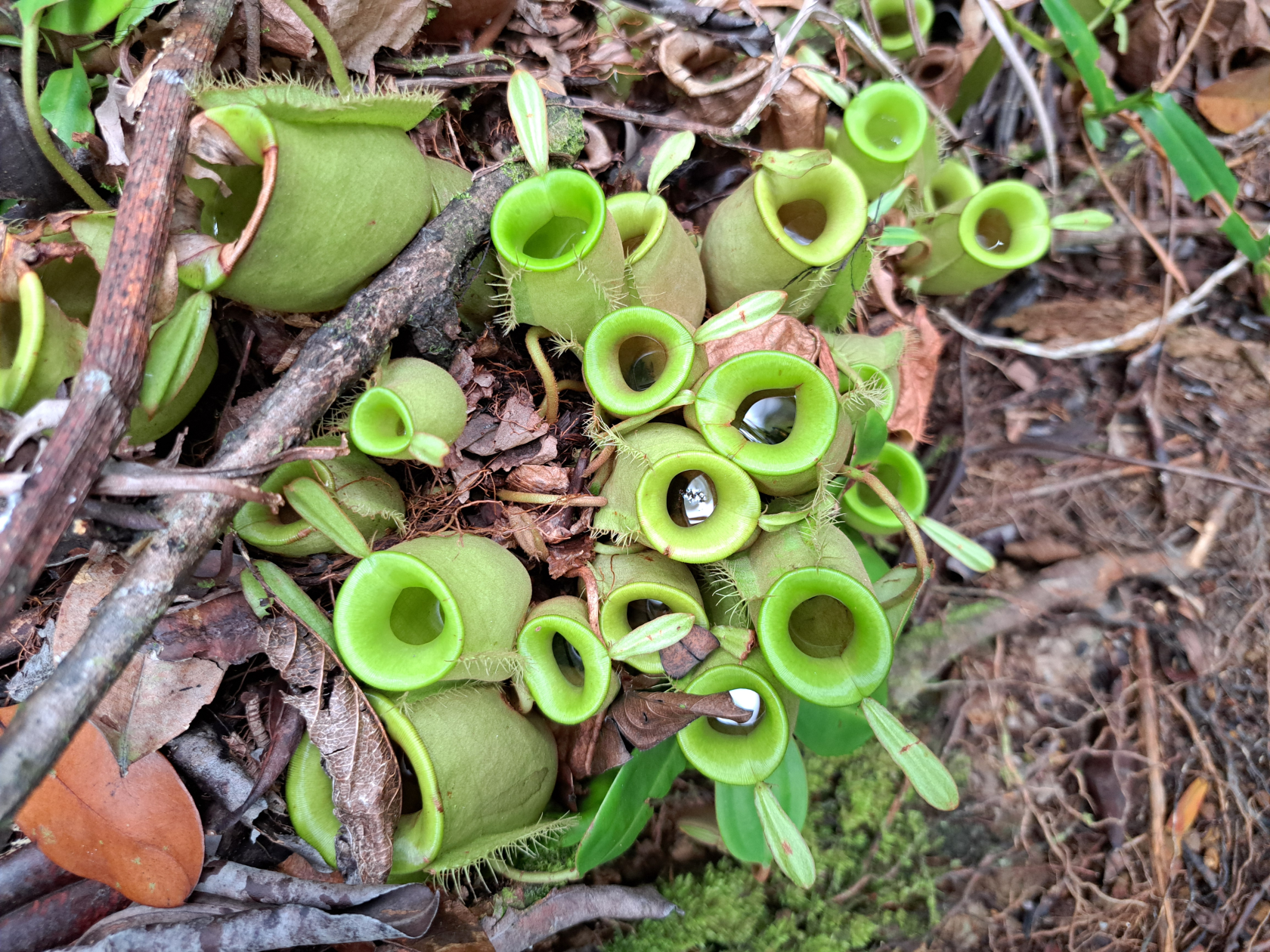
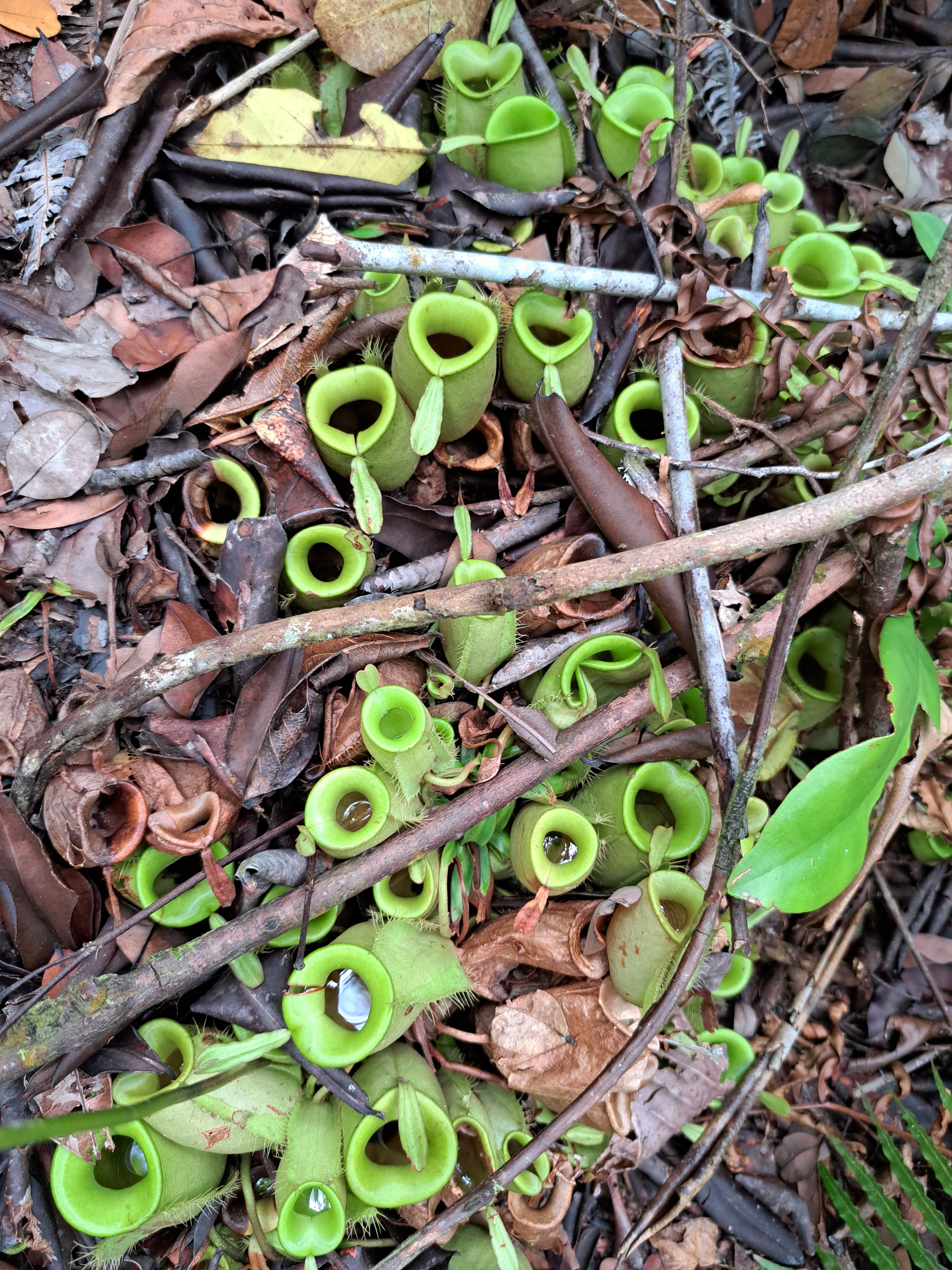
Nepenthes ampullaria is a very widespread, climbing species that is mainly found on the forest floor of tropical rainforests. It is distributed at altitudes ranging from sea level to over 1000 m above sea level. Its range extends over a large part of the Southeast Asian island zone. Its unique feature is that it produces carpets of pitchers on the ground, formed from numerous basal shoots. These serve to catch all material that falls from above. In addition to insects, this includes leaves and other organic material. Nepenthes ampullaria is therefore a detritivore. To this end, the lids of the pitchers are folded upwards or completely backwards. Some frogs (Microhyla nepenthicola) even live in their pitchers, and their tadpoles grow up in them.
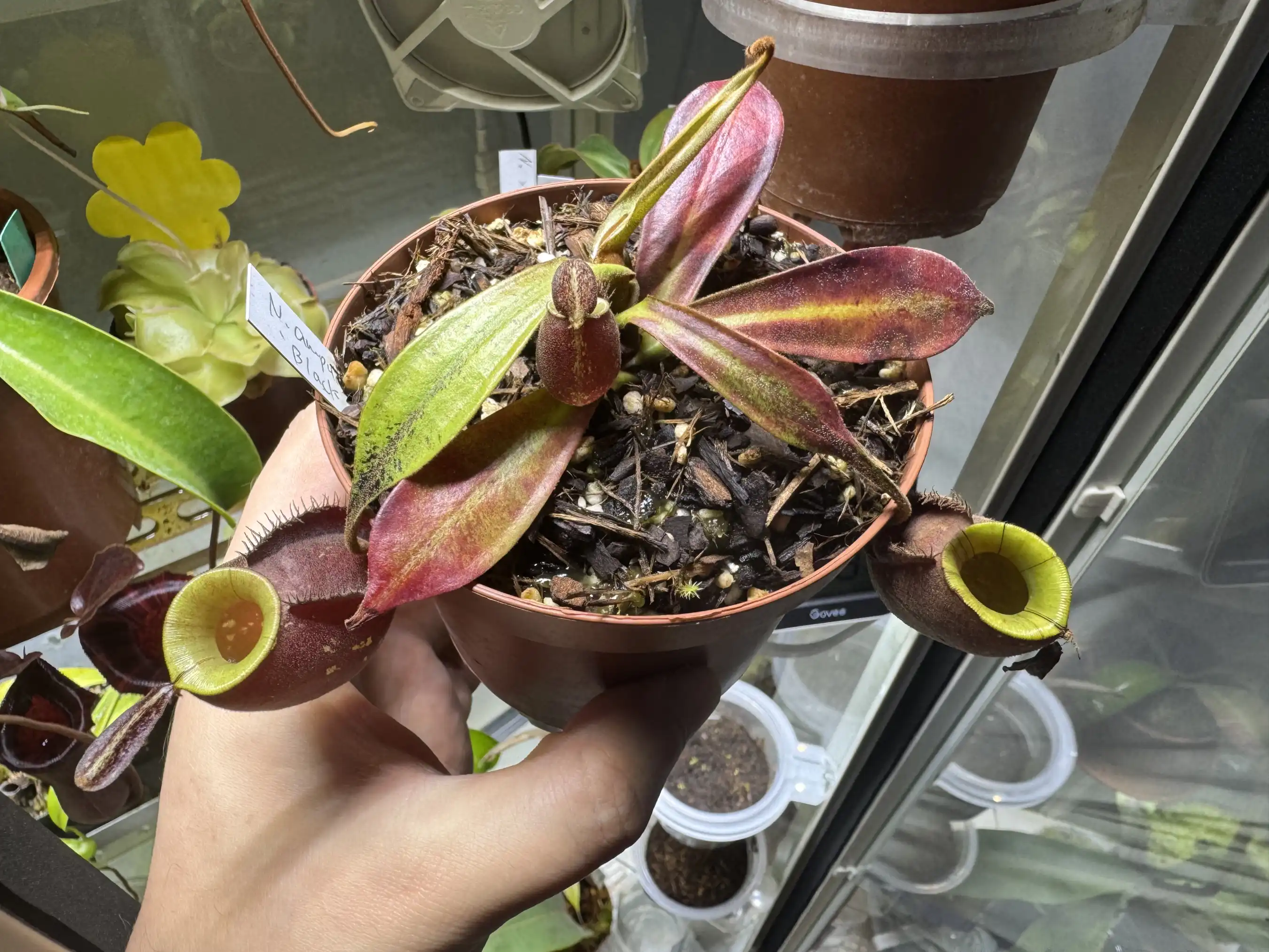
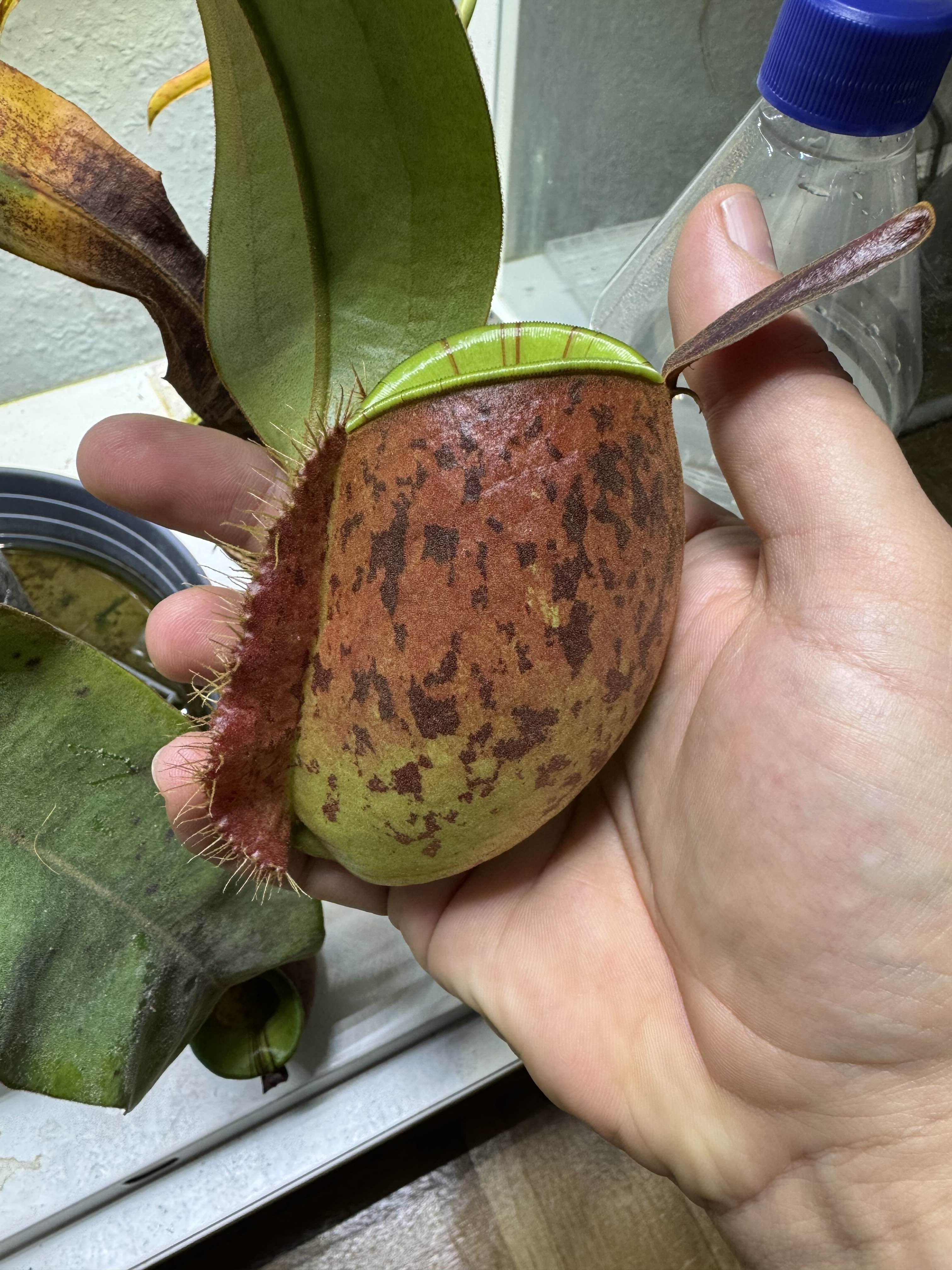
The leaves of the basal shoots are usually so small that only the pitchers can be seen in large numbers, and not the leaves. However, in favor of the basal shoots, tall pitchers are very rarely formed in nature or in cultivation. In general, the pitchers of Nepenthes ampullaria are more barrel-shaped or egg-shaped.
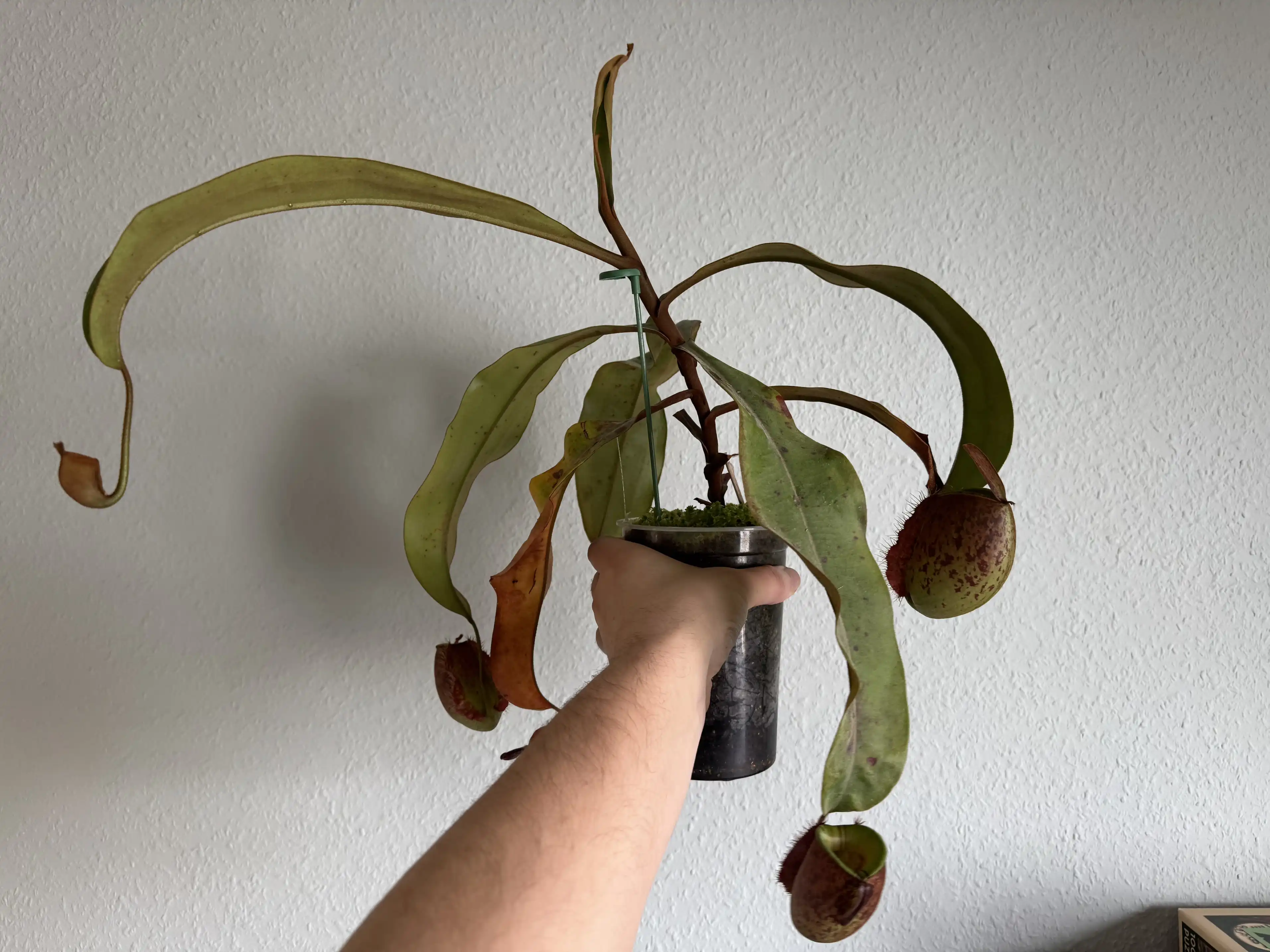
In cultivation, Nepenthes ampullaria can quickly reach considerable sizes. Individual leaves grow to about 25 cm long and 6 cm wide, but bend down slightly after fully unfolding and beginning to form pitchers. The approximate maximum diameter of the plant should therefore be around 50 cm. In relation to the size of the leaves, the pitchers formed are relatively small. A maximum height of approx. 10 cm and a width of 7 cm can be expected. The vast majority of Nepenthes ampullaria in cultivation originate from lowland or intermediate origins. This species tolerates a wide range of temperatures and humidity levels, although a consistently high humidity is strongly preferred. The minimum temperature at night should ideally not fall below 15 °C, and a temperature above 20 °C is desirable.
Nepenthes ampullaria is a fairly readily available plant that is suitable even for beginners. There are also a variety of color variants and hybrids with Nepenthes ampullaria, which have adopted some of the characteristic features of the pitchers. The lids are always slightly wider, revealing hybridization, even if the pitcher shape is still reminiscent of a pure species.
The leaves of the basal shoots are usually so small that only the pitchers can be seen in large numbers, and not the leaves. However, in favor of the basal shoots, tall pitchers are very rarely formed in nature or in cultivation. In general, the pitchers of Nepenthes ampullaria are more barrel-shaped or egg-shaped.
In cultivation, Nepenthes ampullaria can quickly reach considerable sizes. Individual leaves grow to about 25 cm long and 6 cm wide, but bend down slightly after fully unfolding and beginning to form pitchers. The approximate maximum diameter of the plant should therefore be around 50 cm. In relation to the size of the leaves, the pitchers formed are relatively small. A maximum height of approx. 10 cm and a width of 7 cm can be expected. The vast majority of Nepenthes ampullaria in cultivation originate from lowland or intermediate origins. This species tolerates a wide range of temperatures and humidity levels, although a consistently high humidity is strongly preferred. The minimum temperature at night should ideally not fall below 15 °C, and a temperature above 20 °C is desirable.
Nepenthes ampullaria is a fairly readily available plant that is suitable even for beginners. There are also a variety of color variants and hybrids with Nepenthes ampullaria, which have adopted some of the characteristic features of the pitchers. The lids are always slightly wider, revealing hybridization, even if the pitcher shape is still reminiscent of a pure species.
Cultivation
Ideal Conditions
| Parameter | Suggestion | Notes |
|---|---|---|
| Temperature (Day) | 22–35 °C | e.g Many plants grow well between 20–30 °C. |
| Temperature (Night) | 20–25 °C | e.g. Shouldnt fall below 15 °C |
| Light | 100–300 PPFD | Information about light habits of the plant |
| Humidity | 80–100 % | Describe the plants preferred humidity conditions and if theres special characteristics about it, like evaporation protection (indumentum) or smthg like this |
Substrate & Fertilizing
| Parameter | Suggestion | Hinweise |
|---|---|---|
| Substrate | List Substrates | Organic or Mineral Substrate preferred |
| Potsize | eg. bigger or small pot | e.g. the plant roots very wide and has more or less sensitive roots |
| Watering | Always keep very moist | Maybe natural occurence habits, peaty swamps, only epiphytic... |
| Fertilizing | Amount and frequency (eg. 500 µS every week) | mineralic fertilizer |
| Fertilizer Tolerance | medium to high | e.g. Pitchers get damaged if fertilizing was too much |
Unique characteristics
- Bildet Teppiche aus zahlreichen Basaltrieben
- Sehr schnelles Wachstum bei hohen Temperaturen
- Hochkannen werden nur selten gebildet
- In vielen Farbvarianten erhältlich
Galery
General Pictures
User Cultivatad Plants
| Bild | Conditions |
|---|---|
  |
Temperature
|
| Cultivated By: Kevin | |