
Nepenthes campanulata
Nepenthes campanulata is a rather small species native to East Kalimantan in Borneo. It has several rather unusual characteristics that are not found in many other species. These include its very compact growth habit and the fact that it does not climb. Plants with a height of around 10-30 cm are already fully grown and capable of flowering.
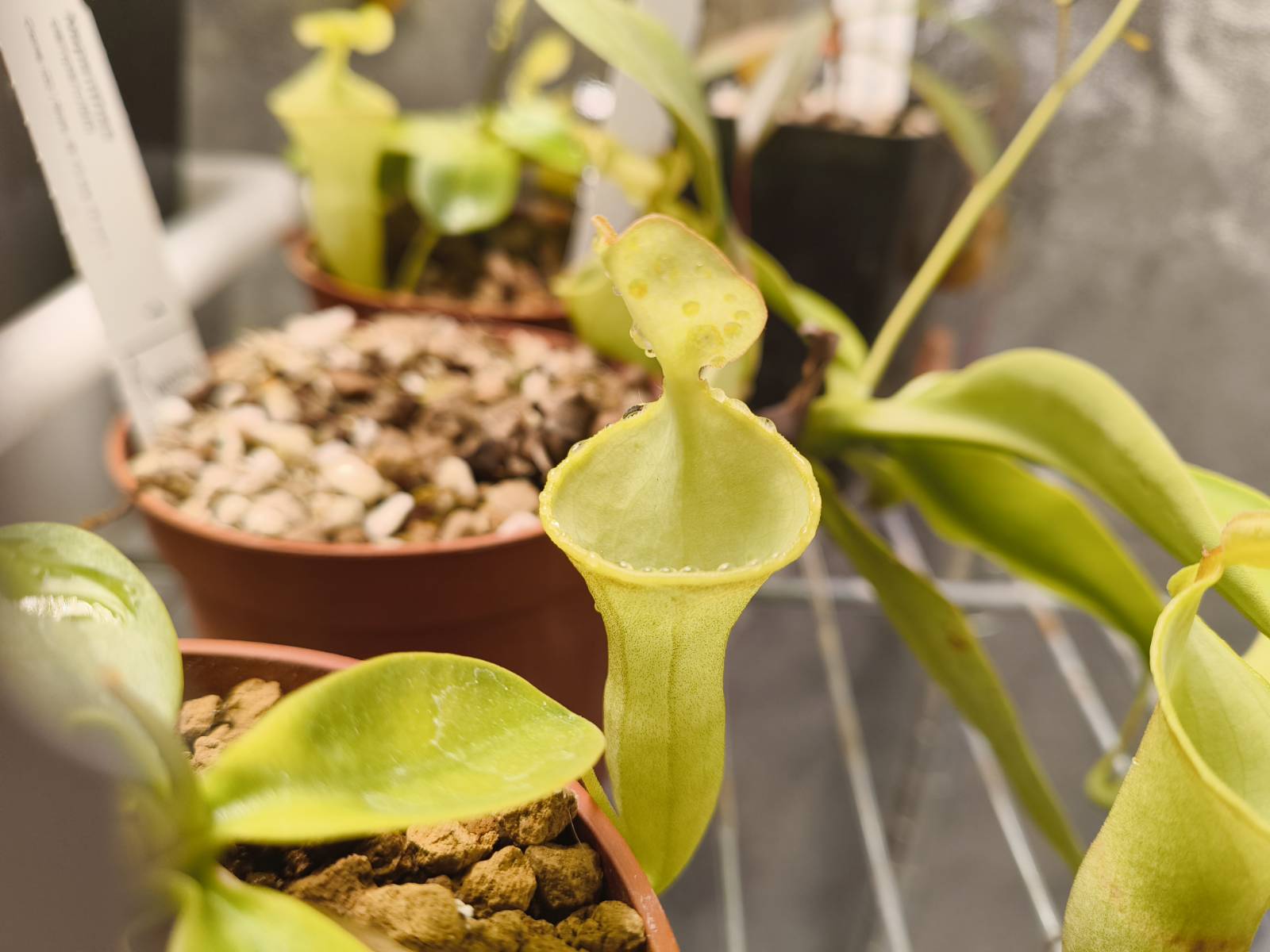
In addition, the pitchers have only a very narrow peristome, which is why it is sometimes referred to as the lowland Nepenthes inermis. The pitchers reach only about 5 to 10 cm in size and do not have a particularly long lifespan. However, the pitcher opening is very wide and can reach up to 5 cm in diameter. The leaves grow to around 12 cm long and 2 cm wide.
Occurrences of Nepenthes campanulata are found on moss-covered limestone cliffs that are otherwise mostly devoid of substrate, at elevations of 300 to 400 m above sea level. Some of these sites are located directly on steep slopes. The habitats have high humidity and are very bright.
This species prefers daytime temperatures of 24 °C to 30 °C and nighttime temperatures not below 18 °C.
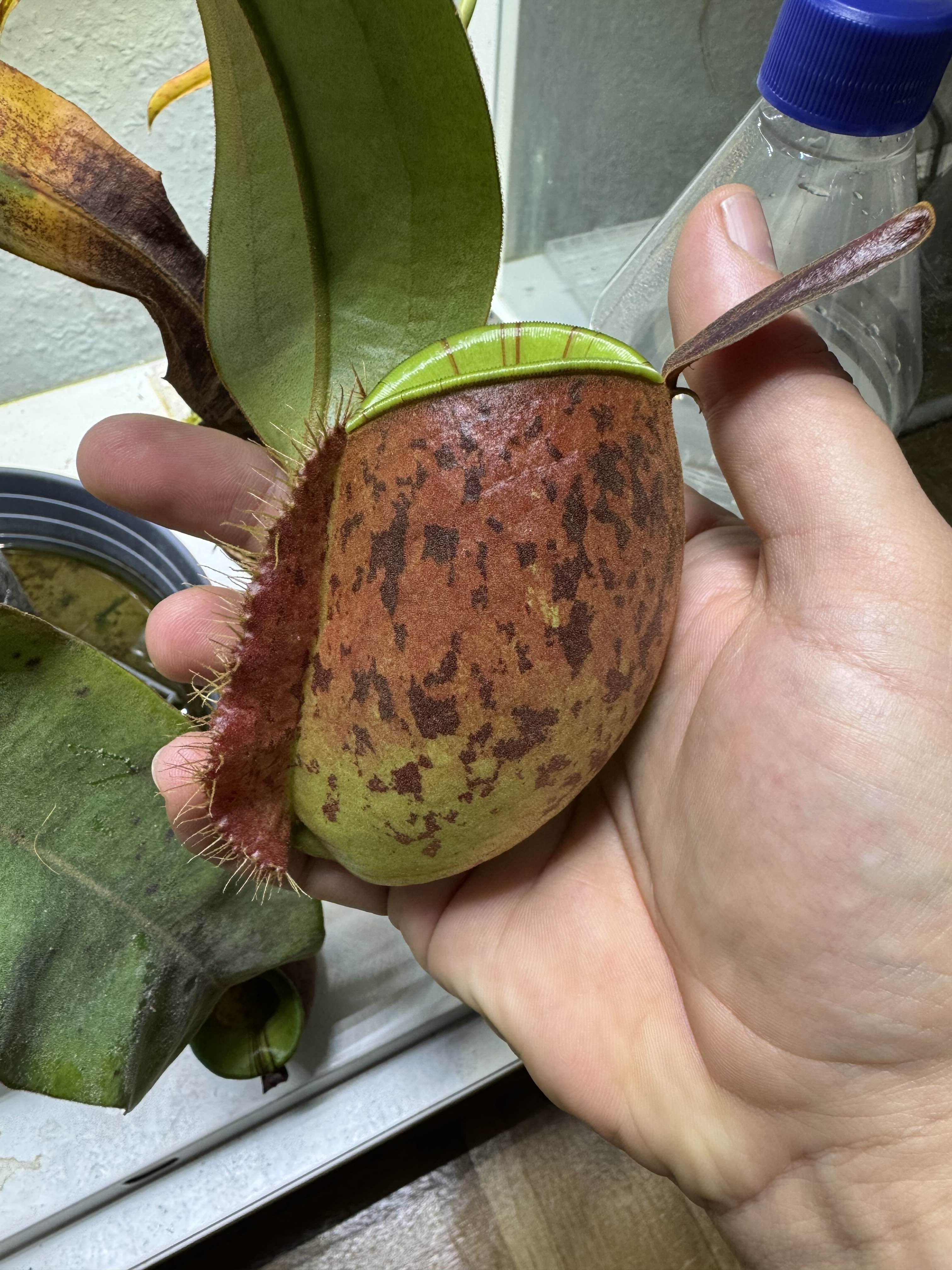
Nepenthes campanulata is a fairly widely available species, although it can still be problematic for some growers when kept as a pure species. There is also a wide range of hybrids involving Nepenthes campanulata, many of which have inherited the characteristic bell-shaped pitcher opening. Most plants available in cultivation have purely green pitchers, although a few forms with red speckling inside the pitchers are also known.
In addition, the pitchers have only a very narrow peristome, which is why it is sometimes referred to as the lowland Nepenthes inermis. The pitchers reach only about 5 to 10 cm in size and do not have a particularly long lifespan. However, the pitcher opening is very wide and can reach up to 5 cm in diameter. The leaves grow to around 12 cm long and 2 cm wide.
Occurrences of Nepenthes campanulata are found on moss-covered limestone cliffs that are otherwise mostly devoid of substrate, at elevations of 300 to 400 m above sea level. Some of these sites are located directly on steep slopes. The habitats have high humidity and are very bright.
This species prefers daytime temperatures of 24 °C to 30 °C and nighttime temperatures not below 18 °C.
Nepenthes campanulata is a fairly widely available species, although it can still be problematic for some growers when kept as a pure species. There is also a wide range of hybrids involving Nepenthes campanulata, many of which have inherited the characteristic bell-shaped pitcher opening. Most plants available in cultivation have purely green pitchers, although a few forms with red speckling inside the pitchers are also known.
Cultivation
Ideal Conditions
| Parameter | Suggestion | Notes |
|---|---|---|
| Temperature (Day) | 24–28°C | Works well in Lowland to Intermediate tropical climate |
| Temperature (Night) | 18–22 °C | Shouldnt fall below 15 °C |
| Light | 100–300 PPFD | Growths lithophytic on limestone cliffs, with constant small amounts of water running down the wall, gets a fair amount of light. Still all in cultivation from Gunung Mulu site arent that exposed to light |
| Humidity | 40–90 % | It seems that also lower humidity isnt an issue for this species, still a bit higher amounts seems to be fine at around constant 60-70% |
Substrate & Fertilizing
| Parameter | Suggestion | Notes |
|---|---|---|
| Substrate | AKP, Sphagnum mixed with Limestone | AKP is working well, Nerz said he uses Sphagnum 3/4 with limestone 1/4. Akadama/pumice 50/50 can work very well too. |
| Potsize | medium | The plant has really sensitive roots which break off with ease. Preventing often repots by choosing a pot which fits it for a long time is better |
| Watering | Always keep very moist | Seems to doesnt like to sit in water or having drops on the leaves for too long |
| Fertilizing | around 500-1000 µS every week | Needs a bit more fertilization than other Nepenthes species |
| Fertilizer Tolerance | high | Feels good with a good amount of fertilization |
Unique characteristics
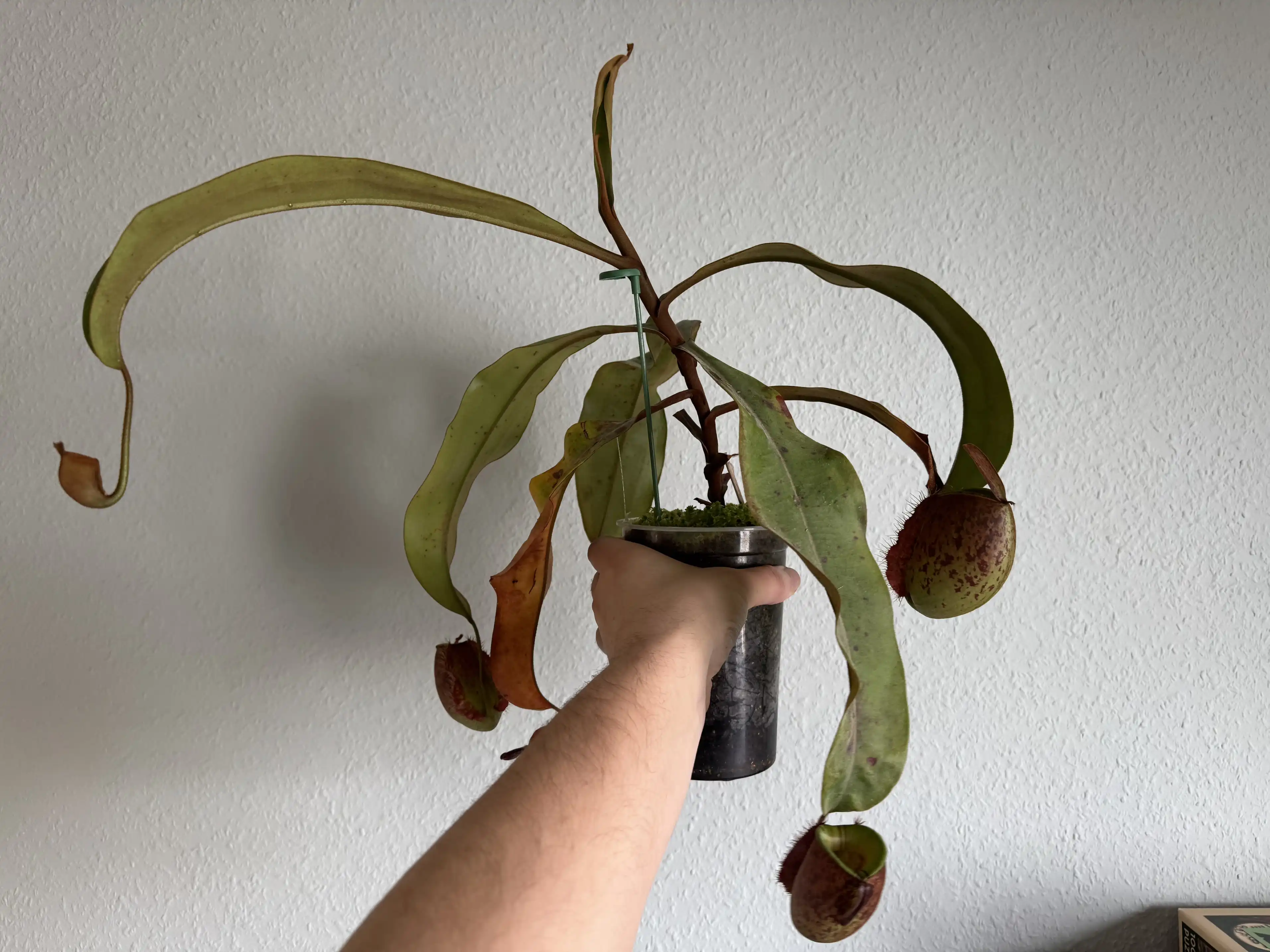
- Non vining species
- Fresh and still folded leaves and tendril tips can appear black cause of the hairs
- Roots are very fragile
- Flowers even with just 10cm diameter and very regularly
- Doesnt produce upper pitchers, but the maturity changes the appearance of the pitchers a bit
- Difficult to hybridize as the seed parents: probable endospermic incompatibility
Galery
General Pictures
User Cultivatad Plants
| Picture | Conditions |
|---|---|
  |
Temperature
|
| Cultivated By: Kevin | |